
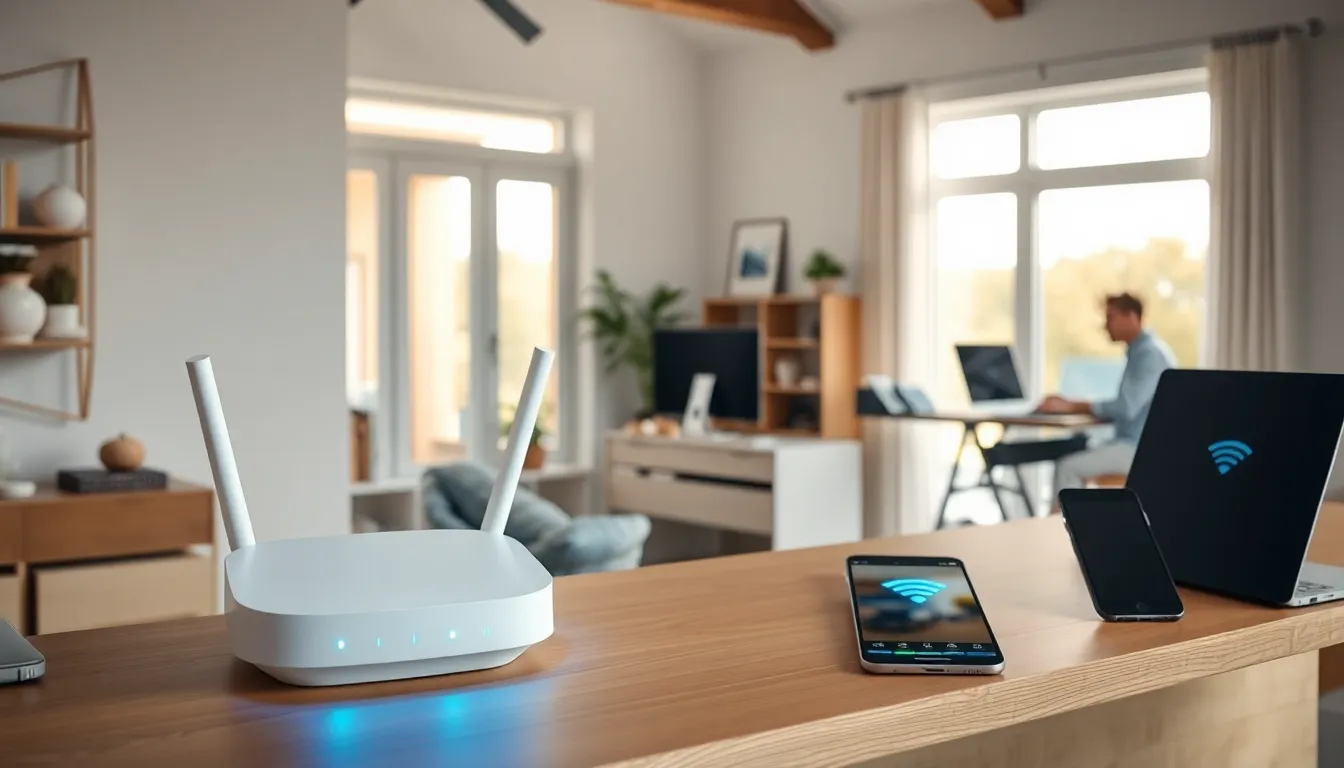
Top home networking setups have become essential for modern households. Families now rely on stable internet for remote work, streaming, gaming, and smart home devices. A weak or outdated network creates frustration and limits productivity.
The good news? Building a fast, reliable home network doesn’t require an IT degree. The right equipment and a few smart adjustments can transform connectivity throughout any home. This guide covers the fundamentals of home networking, the best routers available today, mesh Wi-Fi systems for larger spaces, and practical tips to boost performance.
Table of Contents
ToggleKey Takeaways
- Top home networking setups require the right router matched to your internet plan speed, home size, and number of connected devices.
- Wi-Fi 6 is the current mainstream standard, while Wi-Fi 6E and Wi-Fi 7 offer faster speeds and reduced congestion for power users.
- Mesh Wi-Fi systems eliminate dead zones in larger homes by using multiple nodes that create seamless whole-home coverage.
- Position your router centrally and elevated to maximize signal distribution throughout your home.
- Use ethernet connections for stationary devices like gaming consoles and smart TVs to achieve faster, more stable speeds than Wi-Fi.
- Regularly update router firmware and enable Quality of Service (QoS) to optimize network performance and security.
Understanding Home Network Basics
A home network connects all internet-enabled devices within a residence. This includes smartphones, laptops, smart TVs, gaming consoles, and IoT devices like thermostats and security cameras. The network allows these devices to communicate with each other and access the internet.
Every home network starts with a modem. The modem receives the internet signal from the service provider and converts it into usable data. A router then distributes this connection to devices throughout the home, either through ethernet cables or Wi-Fi signals.
Modern routers support different Wi-Fi standards. Wi-Fi 6 (802.11ax) represents the current mainstream standard, offering faster speeds and better performance with multiple connected devices. Wi-Fi 6E extends this capability by adding the 6 GHz band, which reduces congestion. Wi-Fi 7 devices are now entering the market, promising even greater speeds and lower latency.
Bandwidth determines how much data can flow through the network at once. Think of it like a highway, more lanes mean more traffic can move simultaneously. A household with multiple users streaming 4K video, video calling, and gaming needs significantly more bandwidth than a single user checking email.
Network security also deserves attention. WPA3 encryption provides the strongest protection for home Wi-Fi networks. Users should change default router passwords and keep firmware updated to prevent unauthorized access.
Best Routers for Modern Households
Selecting the right router forms the foundation of any top home networking setup. Several options stand out in 2024 and 2025 for different needs and budgets.
The ASUS RT-AX86U Pro delivers excellent performance for most households. It supports Wi-Fi 6, offers speeds up to 5,700 Mbps, and includes gaming-specific features like traffic prioritization. The dual-band design handles everyday browsing and demanding applications without breaking a sweat.
For larger homes or power users, the TP-Link Archer AXE300 brings Wi-Fi 6E capability. The tri-band configuration provides a dedicated 6 GHz band that reduces interference from neighboring networks. This router covers up to 3,500 square feet and supports over 200 connected devices.
Budget-conscious shoppers should consider the TP-Link Archer AX55. It offers Wi-Fi 6 speeds at a fraction of the cost of premium models. While it lacks some advanced features, it handles the demands of most families with ease.
The Netgear Nighthawk RS700 represents the cutting edge with Wi-Fi 7 support. Early adopters willing to invest in future-proof technology will appreciate its theoretical speeds of up to 19 Gbps. But, most users won’t fully use these capabilities until more Wi-Fi 7 devices become available.
When choosing a router, buyers should consider their internet plan speed, home size, and the number of devices. A high-end router won’t improve speeds if the internet plan maxes out at 100 Mbps.
Mesh Wi-Fi Systems for Whole-Home Coverage
Traditional routers struggle to cover large homes or buildings with multiple floors. Dead zones, areas with weak or no signal, frustrate users and limit where they can work or relax. Mesh Wi-Fi systems solve this problem.
A mesh system uses multiple nodes placed throughout the home. These nodes communicate with each other to create a single, seamless network. Users move from room to room without dropping connections or manually switching between access points.
The Eero Pro 6E ranks among the best mesh systems for most homes. Each unit covers approximately 2,000 square feet, and a three-pack blankets up to 6,000 square feet. Setup takes minutes through a smartphone app, and the system handles over 100 devices without slowdowns.
Google’s Nest Wifi Pro offers tight integration with other Google products. It supports Wi-Fi 6E and includes smart home hub functionality in each node. Families already invested in the Google ecosystem will appreciate the unified experience.
The Netgear Orbi 970 Series targets users who demand the fastest speeds. This Wi-Fi 7 mesh system delivers incredible performance but comes with a premium price tag. It suits large homes with heavy bandwidth requirements.
For budget-friendly whole-home coverage, the TP-Link Deco X55 provides solid Wi-Fi 6 performance at an accessible price. A three-pack covers up to 6,500 square feet and supports 150 devices.
Mesh systems cost more than standalone routers but eliminate the headache of dead zones. They represent the ideal solution for top home networking in multi-story homes or properties with challenging layouts.
Tips for Optimizing Your Home Network Performance
Even the best equipment underperforms without proper setup and maintenance. These practical tips help maximize home network speed and reliability.
Position the router centrally. Wi-Fi signals radiate outward from the router. Placing it in a corner limits coverage to one section of the home. A central location on the main floor distributes the signal more evenly.
Elevate the router. Signals travel downward and outward better than upward. Mounting the router on a shelf or high surface improves coverage, especially in multi-story homes.
Minimize interference. Microwaves, cordless phones, baby monitors, and Bluetooth devices can disrupt Wi-Fi signals. Keep the router away from these devices and large metal objects like refrigerators.
Use ethernet for stationary devices. Wired connections provide faster, more stable speeds than Wi-Fi. Desktop computers, gaming consoles, and smart TVs benefit from direct ethernet connections when possible.
Update firmware regularly. Router manufacturers release updates that fix bugs, patch security vulnerabilities, and sometimes improve performance. Most modern routers support automatic updates.
Change the Wi-Fi channel. Neighboring networks can cause interference, especially in apartments and dense neighborhoods. Router settings allow users to switch channels manually or enable automatic channel selection.
Enable Quality of Service (QoS). This feature prioritizes bandwidth for specific applications or devices. Users can ensure video calls remain smooth even when others in the household are downloading large files.
Reboot periodically. A simple restart clears the router’s memory and resolves minor glitches. Some users schedule weekly reboots for consistent performance.


